The typical boring advice is true: live below your means, invest consistently, let time do the work.
The interesting part isn't the math. It's the people. When you look at the lives behind the stat, you find stories that aren't really about money at all. They're about identity, defiance, and what happens when someone completely disconnects their net worth from their sense of self.
Ronald Read: The Janitor With $8 Million
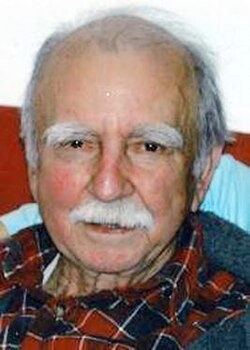
Ronald Read
Janitor & Gas Station Attendant • Brattleboro, Vermont
Estate: $8 MillionRonald Read was a janitor and gas station attendant in Brattleboro, Vermont. He wore flannel shirts held together with safety pins. He fixed his own car, cut his own firewood, and nursed single cups of coffee at the local diner.
When he died in 2014 at 92, his estate was worth $8 million.
He'd built it the most boring way possible—buying blue chip stocks that paid dividends, reinvesting those dividends, and never selling. Some of his stock certificates were found yellowed with age in a safe deposit box. He'd held them for decades. No financial advisor. No trading. Just buying good companies and leaving them alone for 40, 50 years.
He left $4.8 million to his local hospital and $1.2 million to the town library. Nobody who knew him had any idea.
What's Fascinating
What's fascinating isn't the money—it's the invisibility. He lived in a small town where people saw him daily, and not one person knew. He didn't slip up or hint or treat himself to a single visible upgrade in 60 years.
That's not discipline. That's identity. He genuinely didn't want the things money could buy.
Oseola McCarty: The Washerwoman Who Funded What She Was Denied
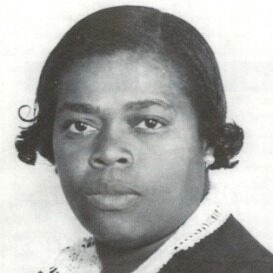
Oseola McCarty
Washerwoman • Hattiesburg, Mississippi
Donated: $150,000If Read's story is quietly impressive, McCarty's is quietly devastating—and then transcendent.
Born in 1908 in rural Mississippi, McCarty was raised by her grandmother and aunt in Hattiesburg. She dropped out of sixth grade to care for her sick aunt and never went back. She became a washerwoman—not with a machine, but with a pot and scrub board, by hand. She washed other people's clothes for 75 years.
She never owned a car. She walked everywhere, pushing a shopping cart a mile to get groceries. She never subscribed to a newspaper—she considered it an extravagance.
When she retired in 1995, hands swollen with arthritis, she had $280,000 in the bank. Then she sat down at Trustmark Bank, where they spread ten dimes on a table, each representing 10% of her savings. She set aside one for her church, one for each of three relatives, and pushed the remaining six toward the University of Southern Mississippi.
$150,000 for scholarships for Black students who couldn't afford college—at a university that wouldn't have admitted her for most of her life.
"I am spending it on myself."
— Oseola McCarty, when asked why she didn't spend it on herselfHer story made national news. Over 600 donors from 30 states contributed, tripling her endowment. Ted Turner donated a billion dollars to charity after hearing about her, saying if she could give everything, he could give a billion. She received the Presidential Citizens Medal and an honorary doctorate from Harvard. Her fund hit $1 million in 2025.
Why Her Story Hits Different
McCarty's story hits different from Read's because of what she was working against. She was a Black woman in Jim Crow Mississippi with a sixth grade education, locked out of the systems that made accumulation easy for others.
Saving $280,000—about $520,000 today—on a washerwoman's income in that environment isn't just impressive. It's defiance disguised as humility.
Chuck Feeney: The Billionaire Who Disappeared
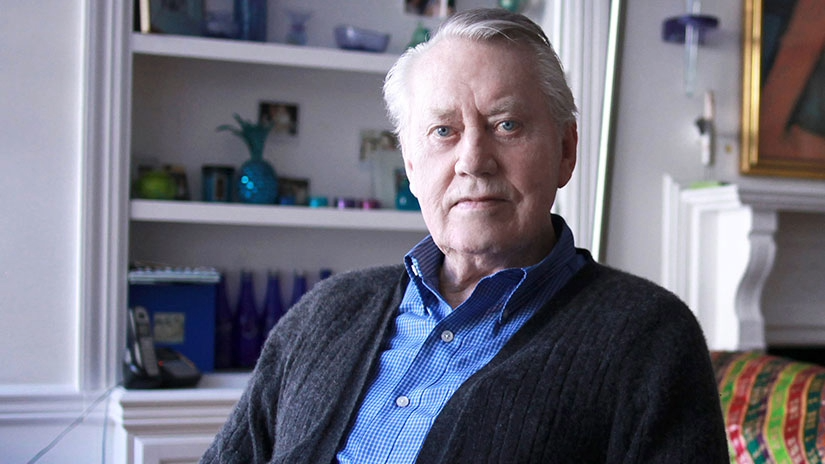
Chuck Feeney
Co-founder, Duty Free Shoppers Group
Gave Away: $8 BillionRead and McCarty prove you can build wealth invisibly. Chuck Feeney asks a harder question: once you have it, can you give it all away and vanish?
Feeney co-founded Duty Free Shoppers Group, turning airport retail into a global empire. By the 1980s, he was worth roughly $8 billion. But Forbes didn't know—because he'd secretly transferred virtually everything to his foundation, The Atlantic Philanthropies.
He flew economy. Wore a $10 watch. No car, no house—a rented apartment. Carried his papers in a plastic bag.
It wasn't until 1997 that a business dispute exposed what he'd been doing: giving away hundreds of millions, anonymously, for years. Once outed, he kept going. Over 38 years he gave $3.7 billion to education, $870 million to human rights, and funded causes from abolishing the death penalty to healthcare reform across multiple continents.
In 2020, he signed the dissolution papers. The foundation was done. All $8 billion, gone. He was left with less than $2 million—and said he was happier.
The Endpoint
Feeney doesn't fit the "$100k salary" archetype. He earned far more. But he belongs here because he represents the endpoint of the same philosophy.
Read and McCarty proved wealth and identity are separate. Feeney proved you can let all of it go and become more yourself in the process.
What Connects Them
A janitor in Vermont. A Black washerwoman in Mississippi. A billionaire from New Jersey. On the surface, nothing in common. Underneath, the same wiring.
They didn't care what people thought about their money. Most people say this. Their spending says otherwise. These three weren't performing discipline—they genuinely didn't get pleasure from visible consumption. That's not restraint. That's temperament.
They treated time as the real asset. Read held stocks for 50 years. McCarty saved coins starting as a child. Feeney spent 38 years giving away a fortune. None of them were in a hurry. Most people can't leave an investment alone for five years, let alone fifty.
They separated money from lifestyle. For most people, earning more triggers spending more—automatically. These three broke that link entirely. The money and the life operated on separate tracks.
They found meaning in giving, not having. Read left his wealth to a hospital and a library. McCarty funded students who looked like her. Feeney reshaped institutions across continents. The money was always heading somewhere. They were just the temporary vessel.
The Uncomfortable Truth
- The biggest predictor of wealth probably isn't income or strategy—it's temperament
- A low need for external validation combined with abnormal patience
- You can know everything about compound interest and still feel the pull of a lifestyle upgrade every time your salary ticks up
- These three didn't fight that pull. They just didn't feel it.
The richest people you'll never hear about aren't hiding their money. They just never thought it was the interesting part of their story.